Prestigious Custom Cabinets

Countertops

how much are quartz countertops​
Quartz Countertops, Custom Cabinets

How Much Are Quartz Countertops? Full Cost Guide

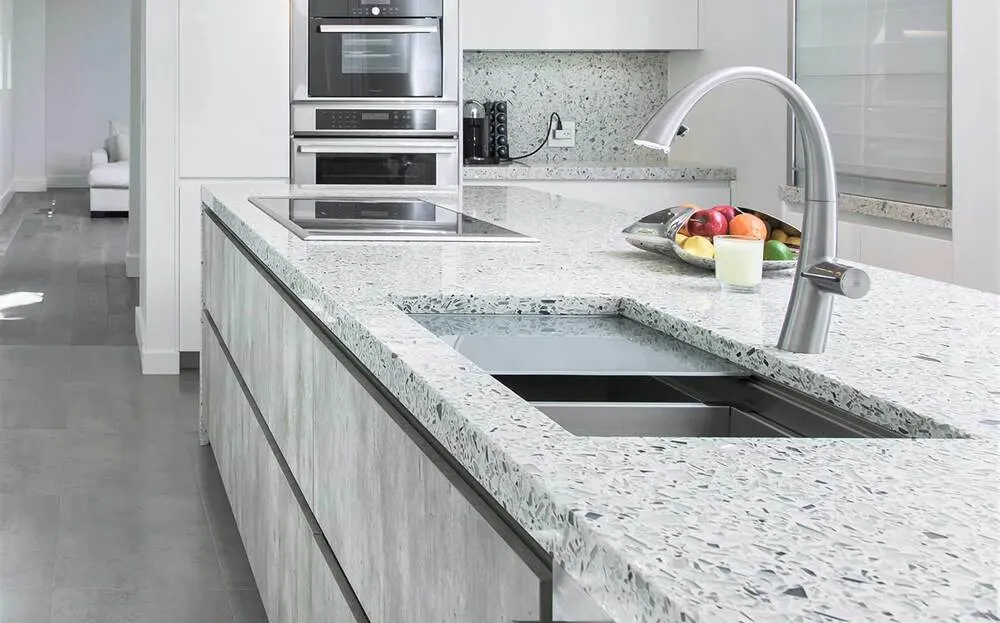
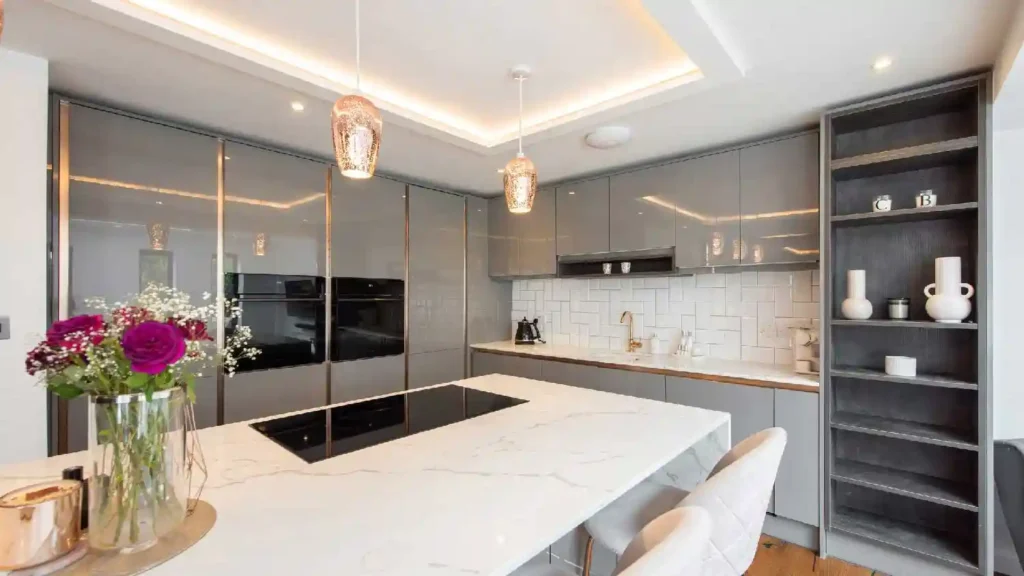
Quartz countertops are one of the most popular choices in kitchens and bathrooms right now. They look great, hold up well, and need almost no maintenance. But before you commit, you need to know what you are actually paying for. Most homeowners spend between $55 and $150 per square foot installed for quartz. That puts a typical kitchen project somewhere between $2,000 and $7,000 total. If you are wondering how much are quartz countertops for your specific space, the number depends on slab grade, edge style, cutouts, and your local labor market. This guide covers every cost factor clearly so you can budget with confidence. What Makes Quartz So Popular? Before getting into numbers, it helps to understand why quartz commands the price it does. Quartz is an engineered stone. It is made from about 90% ground natural quartz crystals mixed with resin binders and pigments. The result is a hard, non-porous surface that looks like natural stone but performs better in many ways. It does not need annual sealing like granite. It resists staining from wine, oil, and coffee better than marble. It comes in dozens of colors and patterns that are impossible to find in nature. And every slab looks consistent, which matters a lot when you need two or three slabs to cover a large kitchen. Those advantages explain why quartz countertop prices have stayed strong even as home renovation costs have risen. Homeowners are willing to pay for the combination of beauty and practicality. Quartz Countertop Cost Basics The total cost of quartz countertops has two main parts: the material and the labor. Material cost covers the slab itself. This varies by brand, color, pattern, and thickness. Entry-level quartz starts around $25 to $40 per square foot for the slab alone. Premium designer quartz can reach $100 or more per square foot just for the material. Labor cost covers fabrication and installation. Fabricators cut the slab to fit your countertop layout, add edge profiles, and cut holes for sinks and faucets. Labor typically runs $35 to $85 per square foot depending on complexity and your location. Add those two numbers together and you get the installed price per square foot. One thing most people miss is the minimum charge. Many fabricators have a minimum job size of 15 to 25 square feet. Even if your bathroom vanity is only 8 square feet, you may pay for 15. Always ask about minimums when collecting quotes. You can read about: How to Clean Quartz Countertops Cost of Quartz Countertops Per Square Foot Here is a clear breakdown of what you can expect to pay at each tier. Entry-level quartz: $55 to $75 per square foot installed. Basic colors like white, gray, and black. Minimal pattern. Brands like MSI or lower-tier Silestone fall here. Good quality, limited design options. Mid-range quartz: $75 to $110 per square foot installed. More color variety, better pattern movement, and more realistic stone looks. Caesarstone, mid-range Cambria, and Viatera sit in this range. This is where most homeowners land. Premium quartz: $110 to $150 per square foot installed. Designer colors, complex veining, and large-format patterns. High-end Cambria, Calacatta-look quartz, and luxury collections from major brands. Worth it if design matters as much as function. Ultra-premium quartz: $150 to $200 or more per square foot installed. Rare colors, oversized slabs, and specialty finishes. Usually found in high-end custom homes and commercial projects. For a 40 square foot kitchen, those tiers work out to roughly $2,200 to $8,000 installed. The range is wide, which is why getting multiple quotes matters so much. Comparing Quartz to Other Countertop Materials Understanding quartz countertops price makes more sense when you compare it to other options. Laminate countertops cost $15 to $40 per square foot installed. They are the cheapest option but do not hold up as well and rarely add home value. Granite countertops run $40 to $100 per square foot installed for most varieties. Entry-level granite is cheaper than entry-level quartz. But rare granite can exceed premium quartz prices easily. Marble countertops start at $60 and go well past $200 per square foot installed. Marble is beautiful but needs sealing, etches from acids, and stains more easily than quartz. Butcher block runs $35 to $70 per square foot installed. It looks warm and natural but needs regular oiling and can warp near water. Concrete countertops cost $65 to $135 per square foot installed. Custom and unique, but heavy and prone to cracking without proper reinforcement. Compared to all of these, quartz counter cost sits in the upper-middle range. You are paying more than laminate or basic granite, but you are getting a surface that outperforms both in daily use. What Affects Your Overall Cost? The price of quartz countertops in your kitchen is not just about the slab. Several other factors push the number up or down. Kitchen size. Bigger kitchens need more material and more labor. A 60 square foot kitchen costs more than a 30 square foot one, obviously. But larger projects sometimes get a better per-square-foot rate from fabricators. Edge profile. A simple eased edge is usually included in the base price. Decorative edges like ogee, waterfall, or double-stacked profiles add $10 to $30 per linear foot. Number of cutouts. Each sink hole, faucet hole, or cooktop cutout adds to the fabrication cost. Expect $100 to $250 per cutout depending on complexity. Backsplash. If you want a quartz backsplash to match your countertops, that adds square footage and cost. A standard 4-inch quartz backsplash adds $15 to $25 per linear foot. Thickness. Standard quartz is 3/4 inch or 1.25 inches thick. Thicker slabs cost more. Waterfall island edges using full slab thickness add significant material cost. Removal of old countertops. Tearing out existing countertops adds $50 to $150 to the project. Some fabricators include this, some charge separately. Ask before signing. Geographic location. Labor costs vary widely by city. A project in New York City or San Francisco costs more than the same project
how long does it take to install countertops
Custom Cabinets, Countertops

How Long Does It Take to Install Countertops | Installation Timeline

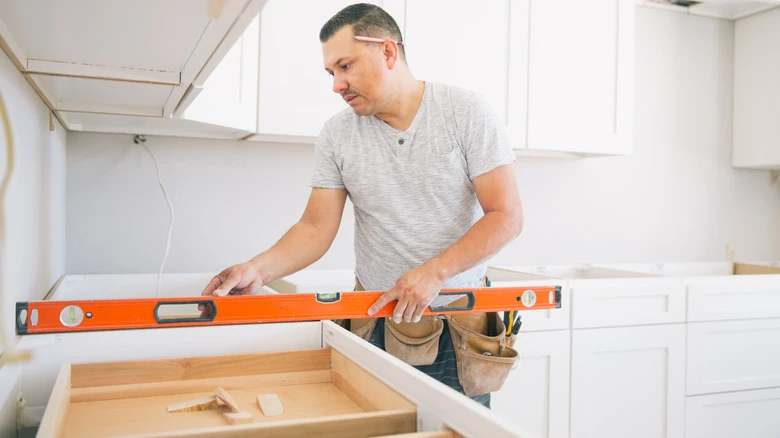
Getting new countertops transforms your kitchen or bathroom instantly. It is one of the highest-value upgrades you can make and one of the most misunderstood when it comes to timeline. Most homeowners expect a quick turnaround. The reality involves a few important steps that happen before any installer arrives. So how long does it take to install countertops? The full process takes 10 to 21 days from first measurement to completed install. Installation day itself runs 2 to 8 hours depending on your kitchen size. This guide walks through every step clearly so you can plan around your life. Understanding the Countertop Installation Timeline Countertop installation is not a same-week project for most homes. Each step depends on the one before it and skipping any step creates problems later. Here is the full timeline at a glance: Measuring and templating: 1 to 2 hours Fabrication: 7 to 10 business days Old countertop removal: half a day Installation day: 2 to 8 hours Final touches and cleanup: same day The fabrication window is where most of the time sits. Your stone is cut, edged, polished, and finished to your exact measurements during this period. Quality fabrication cannot be rushed and that time investment is exactly what ensures a clean, precise result on installation day. Step 1 — Measuring and Templating Your Space (1 to 2 Hours) Everything begins with an accurate template. A fabricator visits your home and maps your countertop space with precision. This step determines the accuracy of everything that follows. Modern professional countertop installation uses digital laser templating in most cases. Laser tools create an exact digital blueprint of your space capturing every wall angle, corner, and cutout location. This eliminates the measurement errors that caused costly remakes with older cardboard template methods. During the template visit, you finalize: Edge profile selection (eased, beveled, ogee, or waterfall) Sink cutout style and exact sink dimensions Cooktop cutout location if applicable Any custom details like mitered edges or integrated backsplash Lock in every decision before fabrication starts. Changes after production begins typically restart the process entirely. Pro tip: Have your sink physically on site before the template appointment. Your fabricator needs exact measurements of the sink opening, not the box dimensions from the product listing. Standard kitchen templating takes 1 to 2 hours. Complex kitchens with islands, multiple rooms, or specialty corners take longer. Step 2 — Fabrication of the Countertop (7 to 10 Business Days on Average) Fabrication is the longest phase of the project. This is where your countertop is actually cut from the slab, shaped to your template, edged, and polished to a finished surface ready for installation. The 7 to 10 business day average covers most standard residential projects. Several factors affect this window. Material availability plays a big role. If your chosen slab is in the fabricator’s warehouse, production starts immediately. If the slab needs to be sourced from a distributor, add 2 to 5 business days before fabrication begins. Project complexity adds time. Waterfall edges, mitered joints, book-matched veining, and custom corner profiles all require additional fabrication steps compared to a straight-run countertop with a simple eased edge. Shop demand matters too. Spring and fall are peak renovation seasons. Fabrication shops run at full capacity during these periods and lead times often extend by a few days. Scheduling your project in winter typically gets you shorter fabrication windows. How long does it take to install quartz countertops specifically? Fabrication runs 7 to 10 business days for quartz the same as granite. Quartz is an engineered material with consistent thickness and density, which makes some cutting steps slightly faster. But the edge finishing, polishing, and quality inspection steps take similar time for both materials. How long does it take to install granite countertops? The same 7 to 10 day fabrication window applies. Natural granite requires careful slab inspection during cutting the fabricator positions each cut intentionally to place veining, color transitions, and natural movement in the most visually effective locations. That attention adds value to the finished product. Important: Do not request changes to your template, edge profile, or material selection after fabrication has started. Mid-production changes typically require a full restart and add the complete fabrication time back to your project schedule. Step 3 — Old Countertop Removal (Half a Day) Your new countertop cannot go in until the old one comes out. Removal happens either the day before installation or the morning of installation day depending on how your fabricator schedules the project. Removal time varies by material: Laminate countertops: 1 to 2 hours typically screwed from below and straightforward to detach Tile countertops: 2 to 4 hours grout lines and adhesive bonding require more work to remove without damaging the cabinet boxes underneath Existing stone countertops: 2 to 3 hours heavy slabs require multiple people and careful handling to avoid cracking during removal Some homeowners handle removal themselves to save on project costs. This works reasonably well for laminate. For heavy stone or bonded tile, professional removal is worth the cost improper technique damages cabinet tops and plumbing connections that are expensive to fix. After removal, the installer inspects the cabinet tops for levelness and structural integrity. Unlevel bases get shimmed at this stage. Addressing this before the new countertop goes in prevents cracking, rocking, and poor seam alignment issues that are much harder to fix after installation. Step 4 — Installation Day (Typically 1 Day) Installation day is when the project comes together. Here is exactly what to expect during countertop installation from start to finish. Morning: Arrival, Delivery, and Dry Fit The installation crew arrives with your fabricated countertop sections. A standard kitchen typically breaks into 2 to 4 pieces with seams placed in low-visibility locations inside corners, against walls, and away from sink areas where possible. Every piece gets a dry fit before any adhesive is applied. The crew checks seam alignment, edge overhangs, wall contact, and cutout positioning. Any fit issue is addressed at this stage. With

what is a waterfall countertop​
Countertops, Custom Cabinets

What Is a Waterfall Countertop? A Complete Guide

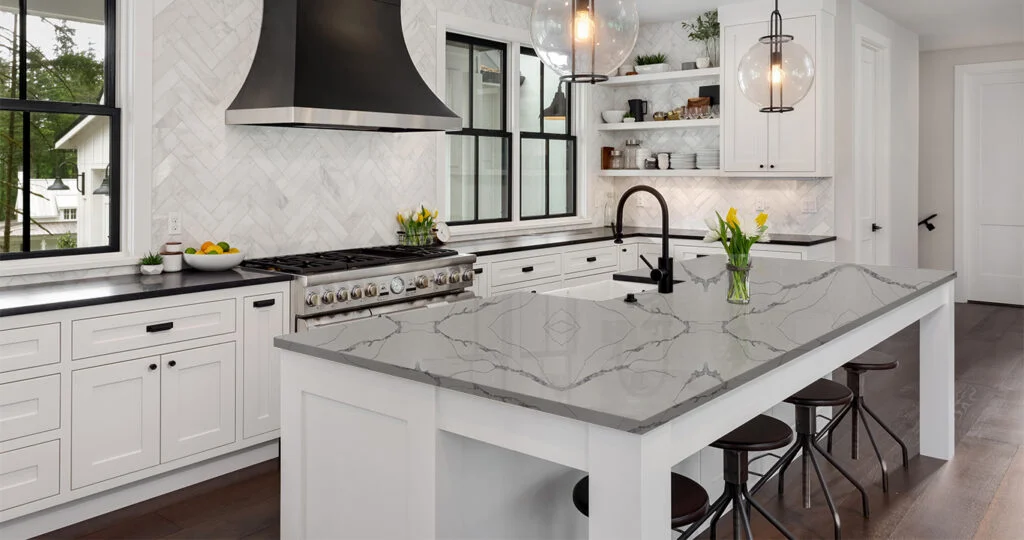
Kitchens have changed a lot. Clean lines, bold materials, and smart design are what homeowners want now. One feature that keeps showing up in modern homes is the waterfall countertop. It looks sharp, feels expensive, and adds real visual weight to any kitchen. So, what is a waterfall countertop exactly? It’s a countertop where the surface material runs straight down the sides of the island or cabinet, all the way to the floor. It creates a smooth, unbroken edge like water falling down. Below, you’ll learn everything about this design choice before you commit to it. What Is a Waterfall Countertop? A waterfall countertop is a style where the countertop material extends vertically down one or both sides of an island or cabinet base. Instead of stopping at the edge, the slab keeps going floor to top in one continuous piece. The term “waterfall” comes from how it looks. The material seems to flow downward, like a sheet of water falling over a ledge. This style is popular in modern and contemporary kitchens. But it also works in transitional spaces where clean design meets warmth. How It Differs from a Standard Countertop A regular countertop sits flat on top of cabinets. The sides are either exposed raw wood or covered with a simple panel in a different material. A waterfall counter wraps around the side, using the same material top-to-bottom. That matching edge is the whole point. It creates visual unity. Everything looks like it was carved from one piece. A Quick History The waterfall edge became popular in the early 2010s as open-plan kitchens took over. Homeowners wanted islands that looked like furniture sculptural, clean, and intentional. High-end designers started using it with marble and quartz. By the mid-2020s, it became a mainstream request in kitchen remodels across the country. Design Advantages of Waterfall Countertops with Design Surfaces There are real reasons designers love this look. Here’s what waterfall countertops bring to the table literally. 1. Strong Visual Impact A waterfall counter commands attention. When you walk into a kitchen, the island becomes a focal point. The vertical slab adds height and depth to what would otherwise be a flat, horizontal surface. If your material has bold veining like marble or certain quartzite the pattern flows from top to side. That continuity is stunning. Interior designers call it “book matching,” where two slabs are mirrored to create a symmetrical pattern across the seam. 2. Protects Cabinet Sides The vertical panel isn’t just pretty. It covers and protects the cabinet sides from bumps, scuffs, and moisture. This matters on kitchen islands that take daily wear backpacks dropped against them, chairs scraping, cleaning products splashing. A stone or quartz panel is far more durable than painted wood. 3. Hides Cabinet Construction Not every cabinet build is perfect. A waterfall countertop hides the end panel of your cabinets completely. If you’ve got a seam, a small gap, or a less-than-perfect finish on the cabinet side, the slab covers it cleanly. 4. Works with Many Layouts Waterfall countertops work on: Kitchen islands (most common) Peninsulas Breakfast bars Bar counters in dining rooms Bathroom vanities You’re not locked into one room or one use case. 5. Adds Resale Value Buyers notice quality finishes. A well-done waterfall counter signals a thoughtful kitchen renovation. Real estate agents in major markets consistently list it as a kitchen feature that attracts buyers and supports higher asking prices. You can read about: How Much Does It Cost to Install Countertops Potential Drawbacks and Practical Considerations No design choice is perfect. Before you commit to waterfall countertops, know what you’re getting into. 1. Higher Material Cost You need more material. A standard countertop covers only the top surface. A waterfall counter needs extra slab for the vertical panel. Depending on your material, that can add significant cost. With natural stone like marble, you also want the veining to match. That means choosing your slabs carefully at the yard and sometimes paying more to get two pieces from the same block. 2. More Complex Installation Installing a waterfall counter isn’t a basic job. The mitered corner where the top meets the side panel needs precision cutting. A bad cut shows a gap or an off-angle seam. You need an experienced fabricator who has done this before. At Prestigious Custom Cabinets, we work with skilled fabricators who handle these cuts with care. The seam should be nearly invisible when done right. 3. Seating Challenges If you want bar stools at your island, a waterfall end can get in the way. The vertical slab blocks the corner seat. You either lose that corner position or you need to plan your layout around it from the start. This is a common issue homeowners don’t think about until the cabinets are already set. Plan your seating layout before you finalize the waterfall design. 4. Not Every Style Fits Waterfall countertops look best in modern, contemporary, or transitional kitchens. If your home has a farmhouse, cottage, or traditional style, the look can feel out of place. It’s a bold design statement to make sure your overall aesthetic supports it. 5. Cleaning Around the Base The bottom edge of the vertical panel sits right at the floor. Mopping around it and keeping the base clean takes a little more attention. You’ll want a tight seal between the stone and the floor to prevent moisture from getting underneath. Choosing Materials and Finishes for Your Waterfall Kitchen Island The material you pick shapes everything: the look, the durability, and the price. Here are the most common options for what waterfall countertops are made of. Quartz Quartz is the most popular choice for waterfall countertops right now. It’s engineered, so it’s consistent in color and pattern. It doesn’t need sealing. It handles heat and scratches reasonably well. For a waterfall edge, quartz is forgiving because the pattern is uniform. Matching the top and the side panel is easy, no dramatic veining to align. Best for: Busy kitchens, families, people

How to Clean Quartz Countertops
Custom Cabinets, Quartz Countertops

How to Clean Quartz Countertops: Full Guide

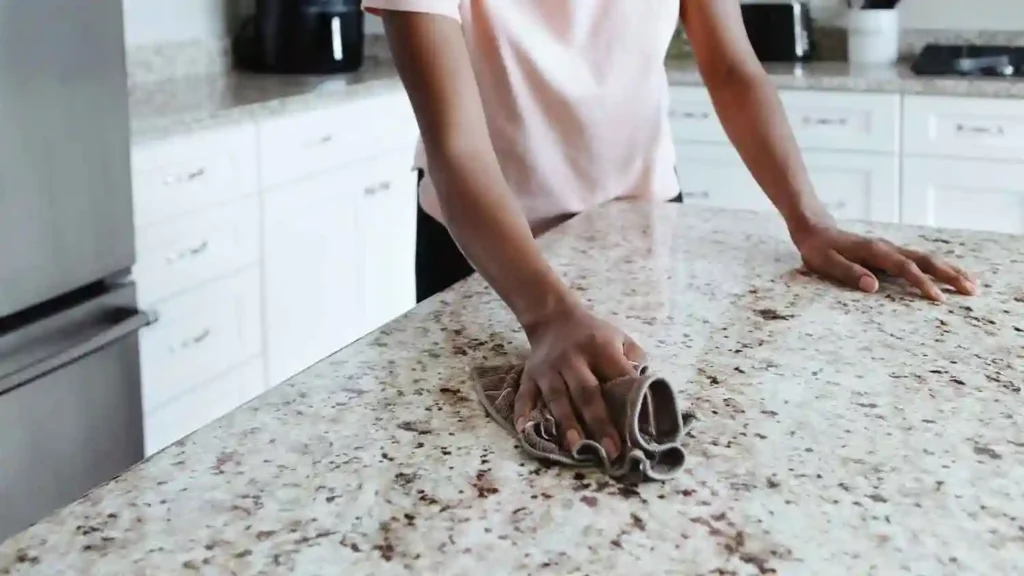
Quartz countertops look great and hold up well in busy kitchens. But even this tough material needs proper cleaning to stay looking new. The good news is that quartz is one of the easiest countertop materials to maintain. A damp cloth and mild dish soap handle most messes in under two minutes. No special products required for daily use. Knowing how to clean quartz countertops the right way also means knowing what to avoid. The wrong cleaner can dull the surface permanently. This guide covers daily routines, tough stain removal, product recommendations, and every mistake that shortens quartz life. Why Quartz Countertops Need Proper Care Quartz is engineered stone. It is made from about 90% ground quartz crystals bonded with polymer resin. That resin makes quartz non-porous and highly stain resistant. But the same resin that makes quartz so durable is also its vulnerability. Harsh chemicals break down the resin binder. Once the resin is damaged, the surface loses its polish, becomes dull, and may develop discoloration that cannot be reversed. No amount of cleaning fixes chemically damaged quartz. Prevention is the only solution. Abrasive cleaners and scrubbing pads physically scratch the resin surface. Even small scratches dull the finish and make the countertop harder to clean over time because debris catches in the micro-scratches. Understanding this helps explain every recommendation in this guide. Every cleaning method and every product warning comes back to protecting the resin that keeps quartz performing the way it should. Daily Cleaning Routine for Quartz Countertops The daily routine for cleaning quartz countertops is simple. It takes about two minutes. Done consistently, it prevents buildup that requires more aggressive cleaning later. What you need: Warm water Mild dish soap (Dawn or similar) Soft microfiber cloth or non-scratch sponge The daily routine: Dampen your microfiber cloth with warm water. Add one or two drops of mild dish soap. Wipe the countertop surface using gentle circular motions. Pay extra attention to areas near the stove, sink, and food prep zones where grease and food particles accumulate. Rinse the cloth with clean water. Wipe the surface again to remove any soap residue. Soap left on the surface dries and leaves a film that makes the countertop look dull. Dry the surface with a clean dry cloth. This prevents water spots, especially in hard water areas where mineral deposits build up quickly. That is the complete daily routine. No sprays, no special products, no waiting. Just soap, water, and a cloth. For most kitchens, this is all you ever need for day-to-day cleaning of quartz countertops. How to Remove Tough Stains from Quartz Countertops Some spills need more than a quick wipe. Here is how to handle the most common tough stains without damaging the surface. Dried or Caked-On Food Do not scrub dried food with force. That scratches the surface. Instead: let warm water soak the dried food for 5 to 10 minutes. The water softens it. Then use a plastic scraper or the edge of a credit card to gently lift the food off the surface. Follow up with the standard soap and water wipe. Never use a metal scraper, steel wool, or abrasive pad on quartz. Metal and abrasive materials scratch the resin surface permanently. Grease and Oil Splatter Apply a small amount of dish soap directly to the greasy area. Let it sit for 2 minutes. Dish soap is specifically designed to cut through oil and grease. Wipe with a warm damp cloth in circular motions. Rinse thoroughly and dry. For heavier grease buildup from cooking splatter, a spray degreaser safe for quartz works well. Look for products labeled safe for engineered stone. Coffee and Tea Stains Coffee and tea can leave a light stain if left to sit. Wipe up coffee spills immediately when possible. For dried coffee stains: apply a mixture of equal parts water and isopropyl alcohol (rubbing alcohol) to the stain. Let it sit for 2 to 3 minutes. Wipe with a soft cloth. Rinse with clean water and dry. Rubbing alcohol is safe for quartz in moderate use. It evaporates quickly and does not leave residue. Do not use it every day as a regular cleaner, but it is effective for occasional stain treatment. Wine and Juice Stains Highly pigmented liquids like red wine, pomegranate juice, and grape juice can leave faint surface stains if not wiped up quickly. For fresh spills: wipe immediately with a damp cloth and soap. Act fast and most stains come right up. For dried stains: apply a small amount of non-bleach household cleaner or a dedicated quartz cleaning spray. Let sit for 3 minutes. Wipe with a soft cloth. Rinse and dry. If a faint mark remains, repeat once or twice. Permanent Marker and Ink Permanent marker on quartz is alarming but usually fixable. Apply rubbing alcohol to a soft cloth. Do not pour it directly on the counter. Press the cloth on the marker mark and hold for 30 seconds. The alcohol dissolves the ink. Wipe away. Repeat if needed. Rinse with water and dry. Nail polish remover also works for marker and ink but should be rinsed off extremely quickly. Nail polish remover contains acetone which can damage the resin if it sits on the surface for more than a few seconds. Hard Water Spots and Mineral Deposits In areas with hard water, white mineral deposits build up around the sink and faucet area over time. Use a mixture of equal parts water and white vinegar to clean hard water spots. Apply with a cloth, let sit for 2 minutes, and wipe away. Rinse thoroughly with water afterward. Vinegar is mildly acidic. Use it only for targeted hard water removal, not for regular daily cleaning. Repeated daily use of vinegar can dull the quartz surface over time. Rust Stains Rust stains happen when iron-containing items like cast iron pans or steel wool sit on the wet quartz surface. Apply a non-abrasive rust remover safe for stone surfaces. Bar Keepers Friend in

how much does it cost to install countertops
Countertops, Custom Cabinets

How Much Does It Cost to Install Countertops? | Cost Guide

Replacing countertops is one of the most impactful kitchen upgrades you can make. New surfaces change how the whole room looks and feels and they hold up better under daily use than worn or damaged ones. The problem is most people have no idea what the real cost looks like until they’re already talking to a contractor. So, how much does it cost to install countertops? For most kitchens, expect to pay between $1,500 and $5,000 total materials and labor included. Higher-end materials like quartzite or marble can push that figure well past $10,000. This guide breaks down every number so you can budget with confidence and avoid surprises. Quick Answer: How Much Does Countertop Installation Cost? Here’s the short version for anyone who needs a fast number: Budget materials (laminate, tile): $15 – $40 per square foot installed Mid-range (quartz, solid surface): $50 – $100 per square foot installed Premium (granite, marble, quartzite): $80 – $200+ per square foot installed Average kitchen total: $1,500 – $5,500 Labor only: $35 – $85 per hour, or $200 – $500 per project The biggest variables are material choice and kitchen size. A 40-square-foot kitchen in laminate costs very differently than a 70-square-foot kitchen in marble. Average Countertop Installation Cost in 2026 The national average for a full countertop replacement in a standard kitchen runs between $2,500 and $4,500. That figure covers: Removal of existing countertops New material (slab or tiles, cut to size) Professional installation and finishing Basic edge profiling It does not usually cover plumbing disconnection and reconnection, backsplash work, or cabinet repairs underneath. How much do new countertops cost for a small kitchen? A 25 to 35 square foot kitchen with quartz countertops typically runs $1,800 to $3,200 fully installed. A large 60 to 80 square foot kitchen in the same material can reach $4,500 to $7,500. The countertop renovation cost jumps significantly when you add an island, choose premium stone, or request decorative edge profiles. Countertop Installation Cost Per Square Foot by Material Material is the single biggest cost driver. Here’s a realistic breakdown of installed price per square foot for 2026: Material Cost Per Sq Ft (Installed) Lifespan Maintenance Laminate $15 – $40 10–20 years Very low Ceramic tile $20 – $45 20+ years Low (grout needs care) Butcher block $35 – $70 20+ years Medium (oiling required) Solid surface (Corian) $45 – $85 15–20 years Low Quartz (engineered) $50 – $120 25+ years Very low Granite $60 – $150 25–50+ years Low (sealing needed) Marble $75 – $200 25+ years High (seals, etching) Quartzite $80 – $200+ 25+ years Low (sealing needed) Soapstone $70 – $150 25+ years Medium (oiling) Concrete $65 – $140 15–25 years Medium (sealing) Porcelain slab $55 – $120 25+ years Very low These prices include fabrication and installation. Material-only prices are lower, but you still need to pay for cutting, edge work, and mounting. Countertop Installation Cost by Countertop Type Beyond material, the countertop configuration affects total cost to replace countertops. Standard straight run: The simplest layout. One continuous surface along one wall. Lowest installation cost for a given material. L-shaped kitchen: Two walls of countertop with a corner joint. Requires a mitered or seamed corner. Adds $50 to $200 to the total. U-shaped kitchen: Three walls. Two corner joints. Most countertop square footage of any standard layout. Expect 20% to 40% more material cost than a straight run. Island countertop: Priced separately. Typically 15 to 30 square feet. Full slab islands with waterfall edges can cost $1,000 to $4,000+ depending on material. Waterfall edge: The countertop material wraps over the side of the cabinet all the way to the floor. Beautiful, expensive. Adds $500 to $2,500 per side depending on slab cost. Peninsula: Similar to an island but connected to a wall on one side. Easier to fabricate than a full island; slightly less expensive. Countertop Labor Cost: What Professionals Charge Labor for countertop installation is charged in one of three ways: hourly, per project, or per linear foot. Hourly rate: $35 – $85 per hour. Most contractors work faster than homeowners expect — a standard kitchen takes 3 to 6 hours of installation time. Per project flat rate: $200 – $600 for a standard kitchen. Higher for complex layouts, heavy materials, or multiple cutouts (sinks, cooktops). Per linear foot: $30 – $70 per linear foot. Common for fabricators who charge separately for material and labor. What affects labor cost: Cutouts. Every sink, cooktop, or prep sink requires a cutout. Each adds $75 to $200 to the labor total. Seams. Longer countertops need seams where slabs meet. Each seam adds $50 to $150. Edge profiles. A basic eased edge is usually free. Ogee, bullnose, or waterfall profiles cost $10 to $30 per linear foot extra. Backsplash removal. If the existing backsplash is attached to the old countertop, removing it without wall damage adds time and cost. Countertop weight. Granite and quartzite slabs are heavy. Moving and positioning them requires more workers or special equipment. Factors That Affect Countertop Installation Costs Several things push the final number up or down: Kitchen size. More square footage means more material and more labor. This is the most straightforward factor. Material choice. A $15/sq ft laminate and a $150/sq ft marble slab don’t just differ in beauty — they differ in fabrication complexity, handling, and installation time. Number of cutouts. Each sink or appliance cutout adds to the total. A kitchen with a farmhouse sink, a prep sink, and an undermount cooktop requires three separate cutouts. Edge profile. Fancy edges take longer to fabricate and polish. A simple square edge is cheapest; ogee and mitered edges cost more. Existing countertop removal. Removing the old surface costs $50 to $200 depending on material and how it was attached. Some installers include this; others charge separately. Plumbing. Disconnecting and reconnecting the sink plumbing is not usually part of a countertop installation. Budget $75 to $200 for a plumber to handle this separately. Geographic location. Labor rates