
Most people spend hours picking a cabinet color and five minutes picking the actual paint. That is a costly mistake. The paint you choose decides how long your cabinets hold up, how easy they are to clean, and whether they chip after one season. The wrong paint costs you twice because you end up doing the job again.
So, what is the best paint for kitchen cabinets? A water-based alkyd or urethane enamel is your best bet. These paints dry hard, resist grease and moisture, and stay clean with a simple wipe. This guide covers every option, every sheen level, and the real products that work.
Why Choosing the Right Paint for Kitchen Cabinets Matters
Kitchens are hard on paint. You have steam from boiling water, grease splatters from the stove, and hands touching cabinet doors dozens of times a day. Regular wall paint was never built for this.
Cabinet paint needs to do four things well: stick to a slick surface, dry hard enough to resist scratches, wipe clean without losing color, and hold up to humidity over years. Most cheap paints fail at least two of those.
Here is what happens when you use the wrong paint:
- Paint peels near the sink within months
- Yellow or brown stains form that no cleaner removes
- Brush marks show clearly in morning light
- Doors stick to frames in summer humidity
- Paint chips when a pot or pan taps the edge
Getting this right the first time saves you money, time, and a lot of frustration. Once you know what to look for, the decision is actually straightforward.
What Is the Best Paint for Kitchen Cabinets?
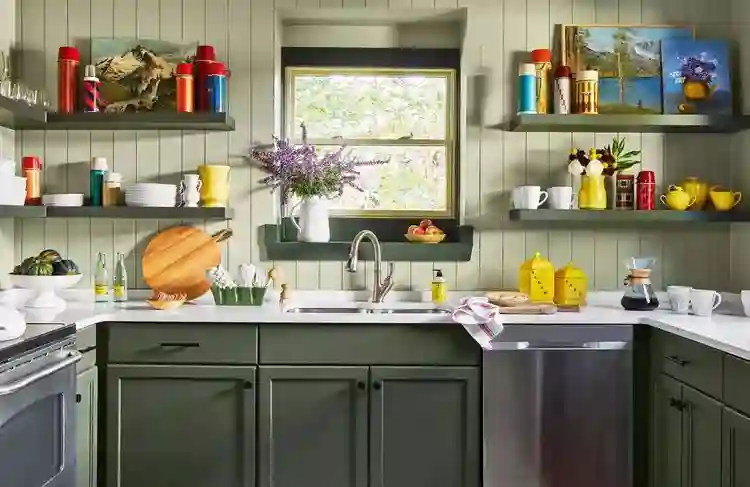
The best paint for kitchen cabinets is a water-based alkyd enamel or a urethane-fortified trim paint. These formulas combine the easy cleanup of latex with the hardness of traditional oil. They level out smoothly, cure tough, and hold their color for years.
Three types stand out above the rest:
- Water-based alkyd enamels (hybrid paints) Best all-around choice for most kitchens
- Urethane trim enamels Best for maximum hardness and durability
- Cabinet-specific latex enamels Best for budget-conscious projects with lighter traffic
If you are working with wood kitchen cabinets, the best paint for wood kitchen cabinets is a water-based alkyd. It bonds to wood well, sands cleanly between coats, and does not yellow like oil-based paint does over time.
For MDF or thermofoil doors, use a urethane latex enamel with a bonding primer first. Skipping the primer is the single biggest reason cabinet paint peels on these materials.
You can read about: How Much Does It Cost to Paint Kitchen Cabinets
Oil vs Water-Based Paint: Which Is Better for Cabinets?
This debate comes up in every cabinet painting conversation. The answer has changed over the last decade. Water-based alkyd is now competitive with oil in almost every category.
Oil-Based Paint — What It Offers
- Dries harder than standard latex
- Self-levels very well, hides brush strokes
- Yellows noticeably on white and light colors over time
- Long dry time: 8 to 24 hours between coats
- Requires mineral spirits for cleanup
- High VOCs — not ideal in poorly ventilated kitchens
Water-Based Alkyd (Hybrid) Paint — What It Offers
- Cures nearly as hard as oil-based paint
- Does not yellow over time stays true to color
- Soap and water cleanup
- Dry time of 4 to 8 hours between coats
- Lower VOCs safer for indoor use
- Can be tinted to thousands of colors
For most homeowners and painters, water-based alkyd wins. You get most of what oil offers without the fumes, the slow drying, or the yellowing issue. It is the best paint for cabinets if you want a professional result without the mess.
How and Why to Use Sherwin-Williams Emerald Urethane Trim Enamel
Sherwin-Williams Emerald Urethane Trim Enamel is the most recommended cabinet paint among professional painters. It shows up on almost every cabinet painting forum, contractor review site, and painter’s supply list for good reason.
It is a water-based urethane formula. That means it cures into a hard, chemical-resistant film rather than just drying like standard latex. The result is a surface that handles grease, cleaning sprays, and daily contact without wearing down.
Why Professionals Choose This Paint
- Levels out like oil paint but cleans up with water
- Blocks tannins from bleeding through on bare wood
- Resists scuffs, grease, and humidity extremely well
- Available in satin, semi-gloss, and gloss sheens
- Holds color without fading for 5 to 10 years with proper care
Step-by-Step Application Guide
- Clean every cabinet surface with TSP substitute or a strong degreaser
- Sand with 120 to 150-grit sandpaper to scuff the existing surface
- Wipe clean with a tack cloth no dust left behind
- Apply a bonding primer (Sherwin-Williams Extreme Bond Primer pairs well)
- Let primer dry fully, then sand lightly with 180-grit
- Apply first coat using a foam roller on flat surfaces and a fine-bristle brush on profiles
- Wait 6 to 8 hours before the second coat
- Sand with 220-grit between coats for a smoother finish
- Apply second coat and allow full cure: 3 to 7 days before closing doors or heavy use
One critical mistake people make is closing cabinet doors too soon. The paint may feel dry in a few hours, but it does not reach full hardness for several days. Closing doors early causes them to stick and leave marks in the fresh finish.
Other Popular Cabinet Paint Options to Consider
Sherwin-Williams is not the only strong option for the best paint for kitchen cupboards and cabinets. Here are four more products worth knowing.
Benjamin Moore Advance
This is a water-based alkyd with exceptional leveling. Its longer open time actually works in your favor when brushing because brush marks level out before the paint sets. It is the top choice among cabinet painters who brush rather than spray. Color accuracy is outstanding across the full Benjamin Moore palette.
Rust-Oleum Cabinet Transformations
This kit-based system was made for DIYers who want a simpler process. It comes with a bonding base coat, decorative glaze, and a protective topcoat. The finish is not as hard as urethane enamel, but it is solid for light-use kitchens or rental properties where you do not need a 10-year finish.
Behr Alkyd Semi-Gloss Enamel
Available at Home Depot and priced lower than premium brands, this is one of the more accessible options for the best paint to paint kitchen cabinets on a budget. Adhesion is good with proper prep, leveling is decent, and the semi-gloss sheen holds up well to wiping. Good for weekend projects with careful prep.
General Finishes Milk Paint
Do not let the name mislead you. This is not the thin, chalky craft-store type. General Finishes makes a furniture and cabinet-grade formula used widely in professional finishing shops. It is water-based, low VOC, and dries to a tough, smooth finish. Excellent for painted shaker-style doors where you want a clean, flat-look surface.
What Sheen Is Best for Kitchen Cabinets?
Sheen level affects how your cabinets look under different lighting, how forgiving they are on imperfect surfaces, and how easy they are to clean. It is worth thinking through before you commit.
Matte vs Satin vs Semi-Gloss vs High-Gloss: What to Choose
Matte: Looks soft and modern. Very hard to wipe clean. Grease absorbs into the finish. Not recommended for any cabinet that gets touched regularly.
Satin: Gentle, low-shine finish. Easy to clean. Hides small surface imperfections better than any gloss option. Great for painted cabinet doors in classic or transitional kitchens.
Semi-Gloss: The most popular choice by far. Durable and easy to wipe. Reflects just enough light to look polished without looking plasticky. Best for high-traffic kitchens.
High-Gloss: Maximum sheen and durability. Looks sleek on modern or European-style cabinetry. Shows every brush stroke, roller texture, and surface flaw. Best results come from spray application only.
For most kitchens, semi-gloss is the right call. It is cleanable, durable, and looks professional without demanding a perfect substrate. Satin is a strong second if you prefer a quieter look. Avoid matte entirely on lower cabinets near the stove or sink.
How to Paint Kitchen Cabinets for a Professional Finish
The right paint only takes you halfway. How you apply it makes a bigger difference. Here is a process that consistently delivers results close to what you see in professional cabinet shops.
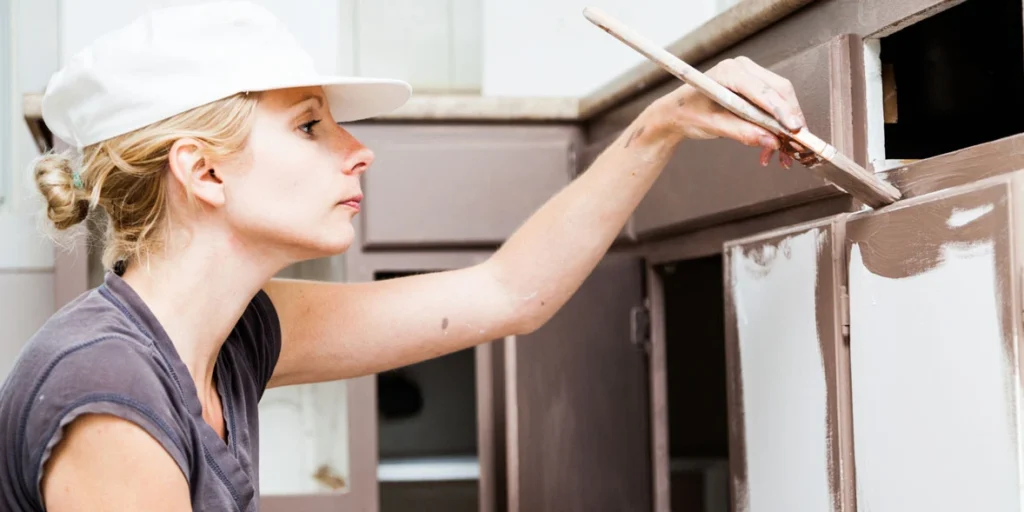
- Remove all doors, drawers, and hardware before you start. Never paint them while hanging.
- Label each door and its location so reassembly is simple.
- Clean everything with a degreaser. Kitchen grease is invisible in many spots and is paint’s worst enemy.
- Sand with 120 to 150-grit to break the existing gloss and give the primer something to grab.
- Wipe down every surface with a tack cloth or damp rag. Zero dust.
- Prime with a bonding primer. Do not skip this step.
- Apply two thin coats of topcoat with a light sand using 220-grit.
- Allow full cure time before rehanging doors or replacing hardware.
If you want this handled by people who do this every day, our Kitchen Cabinet Painting Services in North Lindenhurst cover every step from prep to final coat. The team at Prestigious Custom Cabinets has repainted hundreds of kitchens and knows exactly which products hold up long term in real homes.
How to Get a Factory Smooth Paint Finish
A factory-painted cabinet looks flawless because it is sprayed in a climate-controlled booth. You can get close at home with the right tools and a little patience.
- Use an HVLP spray gun if possible. Even a basic Earlex or Wagner HVLP unit beats any brush for finish quality on flat doors.
- If you cannot spray, use a high-density foam roller on flat panels. Follow with a light tip-off using a soft brush to pop any remaining bubbles.
- Thin the paint slightly with water (5 to 8%) for better atomization and leveling. Check the product data sheet for the manufacturer’s thinning limit.
- Paint in a dust-free space. A single dust particle drying into the surface shows clearly in gloss or semi-gloss finishes.
- After the final coat dries, do a light wet sand with 400-grit on a foam block. Then buff with a clean microfiber cloth for a near-glassy result.
The biggest separator between an average paint job and a great one is patience. Thin coats, proper dry times, and the between-coat sanding step are what make the difference. Most people skip the sanding and it shows.
Do You Need a Primer Before Painting Kitchen Cabinets?
Yes. Primer is not optional when painting cabinets. This is the step most DIYers skip and then regret six months later when the paint starts to lift at the edges.
Primer does three things that topcoat paint cannot do on its own: it creates mechanical adhesion to slick or previously painted surfaces, it seals wood tannins so they do not bleed through and yellow your paint, and it gives you a uniform base coat so your topcoat covers in fewer coats with a more even sheen.
Best Primers for Kitchen Cabinets
Zinsser BIN (shellac-based): The strongest stain blocker available. Best for raw or bare wood cabinets where tannin bleeding is a risk. It dries fast and sands smooth.
Zinsser Bulls Eye 1-2-3: A solid all-purpose water-based primer. Works on previously painted surfaces and gives good adhesion for most topcoats.
Sherwin-Williams Extreme Bond Primer: Best for slick surfaces like laminate, MDF with a factory coating, or already-painted cabinets in good condition.
What Paint Did We Use? (Real Experience Section)
At Prestigious Custom Cabinets, we have tested a wide range of products across hundreds of kitchen projects over the years. Our consistent go-to is Sherwin-Williams Emerald Urethane Trim Enamel in semi-gloss. It delivers the best combination of hardness, leveling, and color retention in real kitchen conditions.
For raw wood cabinets, we prime with Zinsser BIN shellac-based primer first. It locks down tannins completely, bonds tight to bare wood, and gives the urethane topcoat a solid base to build on.
For already-painted cabinets that are in decent shape, we clean with a TSP substitute, scuff with 150-grit, and go straight to two coats of Emerald Urethane. We use an Earlex HVLP sprayer for all doors and a 4-inch foam roller for box interiors.
The results hold up. We have revisited kitchens we painted five years ago that still look clean and fresh. No chipping, no yellowing, and no peeling at door edges. That is the real-world test that matters.
Things to Consider Before Choosing Cabinet Paint
Before you buy a single can, think through these points. They will save you from choosing a paint that looks good on paper but fails in your specific situation.
Cabinet material: Wood, MDF, laminate, and thermofoil each need different prep, primer, and sometimes a different topcoat formula. Know your material first.
Application method: Brush, roller, and sprayer each work best with different paint viscosities. Check the product data sheet to see if thinning is recommended for your chosen method.
Budget: Premium paints cost more up front but cover in fewer coats and last much longer. The math usually favors spending more on the paint.
Color choice: Darker colors are less forgiving. They show brush strokes, surface texture, and application imperfections much more than whites or soft grays.
Kitchen activity level: A busy home with daily cooking needs a harder, more washable finish than a lightly used second kitchen or rental unit.
Existing paint type: Check whether your current paint is oil or latex. Painting latex over oil without scuffing causes peeling. Test by rubbing a cotton ball soaked in rubbing alcohol on the surface. The paint that comes off is latex. No transfer means oil.
Conclusion
Knowing what is the best paint for kitchen cabinets puts you ahead of most people who just grab what is on the shelf. Water-based alkyd enamels and urethane trim paints are the top choices. They cure hard, clean easily, and hold their finish for years when applied with the right prep and process.
The best paint to paint kitchen cabinets is not always the most expensive one. It is the right paint for your surface, your application method, and your kitchen’s daily demands, applied correctly over the right primer.
If you want the job done right and want it to last, reach out to Prestigious Custom Cabinets. We bring the knowledge, the right materials, and years of real kitchen experience to every project.
Frequently Asked Questions
What is the most durable paint for kitchen cabinets?
Urethane enamel paints are the most durable. Sherwin-Williams Emerald Urethane Trim Enamel and Benjamin Moore Advance both cure into a hard, chemical-resistant film that handles grease, moisture, and daily use without wearing down quickly.
Can I use regular wall paint on kitchen cabinets?
No. Regular wall paint is too soft and will not survive wiping, grease exposure, or humidity over time. You need a cabinet-specific enamel or a high-quality trim paint rated for high-use surfaces and regular cleaning.
How many coats of paint do kitchen cabinets need?
Two coats of topcoat over one coat of primer is the standard. Some darker colors over light surfaces may need a third topcoat for full coverage. Thin, even coats always outperform one thick coat in terms of adhesion and finish quality.
What is the best sheen for kitchen cabinet paint?
Semi-gloss is the best all-around choice. It is easy to wipe clean, resists moisture, and looks polished without being overly shiny. Satin is a good alternative if you prefer a softer, quieter finish. Avoid matte on any cabinet that sees regular contact or cooking activity.
Is Benjamin Moore Advance or Sherwin-Williams Emerald better?
Both are excellent paints. Benjamin Moore Advance has a longer open time which helps when brushing because marks level before the paint sets. Sherwin-Williams Emerald Urethane cures slightly harder. If you are spraying, go with Emerald Urethane. If you are brushing, Advance gives you more working time.
How long does a cabinet paint job last?
With proper prep, a good bonding primer, and a quality enamel, a cabinet paint job lasts 8 to 15 years. The prep work matters as much as the paint itself. Skipping steps like degreasing or priming cuts that lifespan significantly.
What is the best paint for kitchen cupboards made of MDF?
For MDF cabinets, use a urethane latex enamel over a shellac-based or bonding primer. MDF absorbs moisture and swells if not sealed properly, so primer quality matters more on this material than on solid wood. Avoid heavy sanding on MDF edges as it can raise the fibres and ruin the surface.