
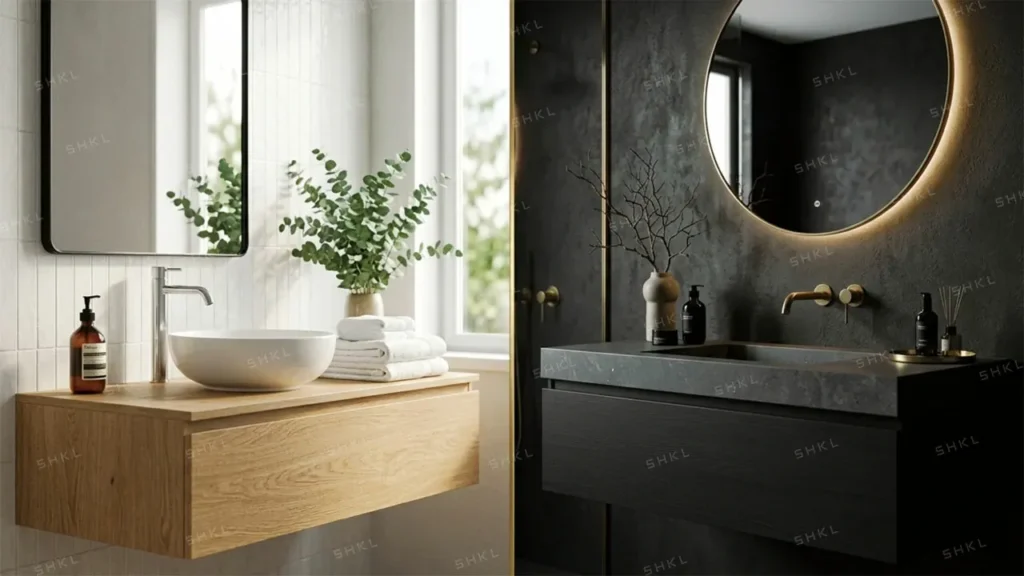
If you’re planning a bathroom remodel or just curious about the basics, the vanity is the one fixture that ties the whole room together. It holds the sink, provides storage, and sets the visual tone for the entire space. Most people use one every day without thinking about it much.
So, what is a bathroom vanity? It’s a cabinet unit that combines a sink, countertop, and storage into one piece. It’s not just decorative, it’s one of the hardest-working fixtures in your home. This guide covers everything you need to know, from components to styles to how to pick the right one.
What Is a Vanity in a Bathroom?
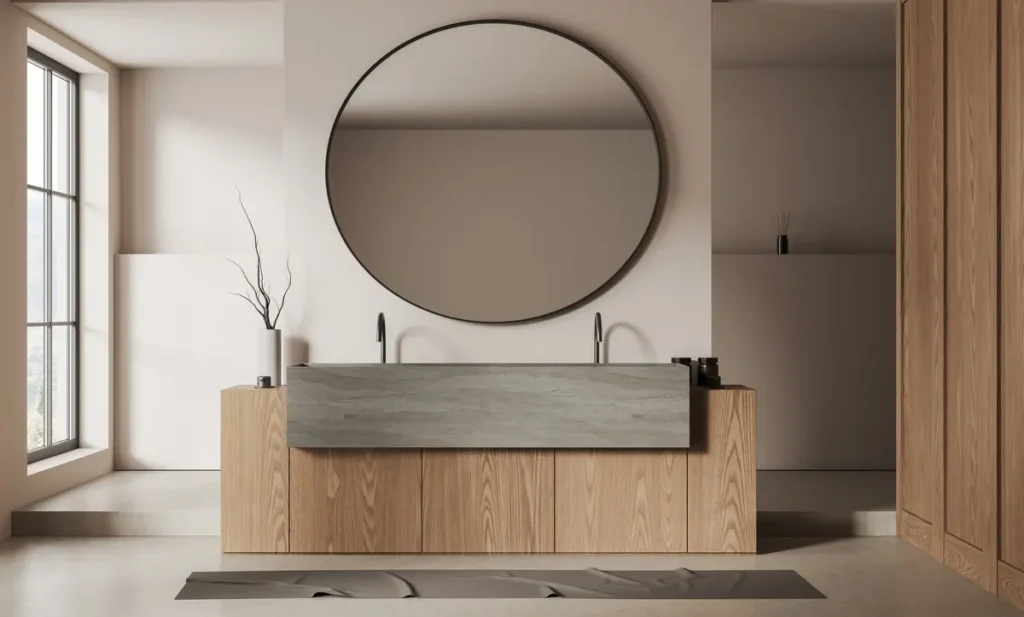
Let’s start with a clear bathroom vanity definition.
A bathroom vanity is a freestanding or wall-mounted cabinet that houses a sink and usually a countertop. It sits against a bathroom wall and serves two purposes: plumbing function and storage. It’s where the sink drain and water supply lines connect, and it’s also where you store toiletries, cleaning supplies, and daily essentials.
The bathroom vanity meaning goes a bit beyond just “a cabinet with a sink.” It’s the anchor of the bathroom. In most homes, it’s the first thing you notice when you walk in. It influences the style, feel, and functionality of the entire room.
What is vanity in bathroom design terms? It’s a built unit not just the cabinet, not just the sink, but the whole combination working together. Some vanities come with mirrors or light fixtures above them as part of a complete vanity set.
To define a vanity bathroom simply: it’s a cabinet plus sink plus countertop, built to handle daily grooming, storage, and plumbing all in one place.
Main Components of a Bathroom Vanity
Understanding the parts helps you make better buying and design decisions. Here’s what makes up a full vanity unit:
1. The Cabinet (Vanity Base)
This is the main body, the wooden or MDF structure that holds everything else. It contains the doors, drawers, and interior shelving. Cabinet quality varies a lot. Solid wood holds up better in humid environments than particleboard.
2. The Countertop
Sits on top of the cabinet. The countertop surrounds the sink and provides workspace. Common materials include:
- Marble — elegant and heat-resistant, but requires sealing
- Granite — durable and unique, great for high-use bathrooms
- Quartz — engineered, non-porous, low maintenance
- Laminate — budget-friendly but less durable long term
- Concrete — custom, industrial look, requires sealing
- Cultured marble — affordable and available in many colors
3. The Sink (Basin)
The sink is integrated into or set on the countertop. There are several sink styles:
- Undermount — installed beneath the countertop for a clean look
- Drop-in (top-mount) — sits in a hole cut into the counter
- Vessel — sits on top of the counter like a bowl
- Integrated — sink and countertop are one continuous piece
4. The Faucet
May or may not come with the vanity. Faucets attach through holes in the countertop or sink. Styles include single-hole, widespread (3-hole), and wall-mounted.
5. Doors and Drawers
These are the storage elements. Soft-close hinges, full-extension drawer slides, and dovetail joints are signs of quality construction. Better hardware means longer life.
6. Plumbing Connections
Inside the cabinet, the drain line and supply lines connect to the sink. A cutout in the back of the cabinet allows pipes to pass through.
7. The Mirror or Medicine Cabinet
Not always included, but often sold as part of a vanity set. A mirror above the vanity completes the grooming station. Medicine cabinets add recessed storage behind the mirror.
Types of Bathroom Vanities
There’s no single right type; it depends on your bathroom size, style, and storage needs.
Freestanding Vanity
The most common type. Sits on the floor with four legs or a solid base. Easy to install and replace. Available in every size and style. Good for most bathrooms.
Floating (Wall-Mounted) Vanity
Mounted directly to the wall with no floor contact. Creates a modern, open look. Makes the floor easier to clean. Requires wall blocking or a sturdy wall structure to support the weight.
Single Sink Vanity
One sink, one cabinet. Ideal for smaller bathrooms or single-user spaces. Widths typically range from 24 to 48 inches.
Double Sink Vanity
Two sinks, wider cabinet. Ranges from 60 to 72 inches wide. Best for shared bathrooms or master baths. Needs more wall space and two sets of plumbing connections.
Vessel Sink Vanity
Designed specifically to pair with a vessel (above-counter) sink. The cabinet is lower than standard, usually 31 to 33 inches to account for the sink height sitting on top.
Corner Vanity
Built to fit into a corner. Space-saving solution for very small bathrooms or powder rooms. Typically triangular or angled in shape.
Custom Vanity
Built to exact specifications. You choose the dimensions, materials, finish, hardware, and layout. Best for unusual spaces or high-end remodels.
Benefits of a Bathroom Vanity
Why does every bathroom have one? Because it solves several problems at once.
Storage. Bathrooms are small. A vanity hides pipes, stores supplies, and keeps countertops clear. Drawers and cabinets keep everything organized and out of sight.
Plumbing concealment. Without a vanity cabinet, your sink’s drain and supply lines are fully exposed. The vanity base hides all of that cleanly.
Countertop workspace. A flat surface next to the sink matters. You need space to set things down while getting ready. Vanity countertops provide that.
Style impact. The vanity is usually the largest piece of furniture in a bathroom. Changing it transforms the whole look of the room without a full renovation.
Resale value. Updated bathrooms are a strong selling point. A modern, well-installed vanity is one of the most cost-effective upgrades for resale.
Hygiene. A good vanity keeps moisture-prone items (soap, razors, medications) off the floor and in contained, dry spaces.
You can read about: How to Build a Bathroom Vanity
How to Choose the Right Bathroom Vanity
There’s a lot to consider. Here’s how to make a smart decision.
Step 1: Measure Your Space
Start with the room dimensions. Measure the wall width where the vanity will go. Also measure the ceiling height, door clearances, and toilet placement. Leave at least 15 inches between the edge of the vanity and the toilet or wall.
Step 2: Set a Budget
Vanities range from under $200 for basic stock units to $5,000+ for custom builds. Know your number before you shop. Don’t forget to budget for installation, faucets, and any additional plumbing work.
Step 3: Choose the Right Size
Standard vanity widths: 24″, 30″, 36″, 48″, 60″, 72″. The depth is usually 21 to 22 inches. Height is typically 32 to 36 inches (comfort height is 36″, which matches kitchen counters).
Step 4: Pick Your Style
Match your vanity to the overall bathroom design:
- Traditional — raised panel doors, decorative feet, warm wood tones
- Modern/Contemporary — flat fronts, clean lines, matte or gloss finishes
- Farmhouse — shiplap details, apron sinks, rustic hardware
- Transitional — a middle ground between traditional and modern
Step 5: Select the Right Countertop Material
Think about daily use. Granite and quartz are durable and water-resistant. Marble looks great but needs more care. Laminate is budget-friendly but less resilient in high-moisture areas.
Step 6: Consider Storage Needs
How many people use this bathroom? More users = more storage needed. Look for deep drawers, pull-out organizers, and interior shelving. A vanity with a mix of drawers and open cabinet space offers the most flexibility.
Step 7: Think About Plumbing
If you’re replacing an existing vanity, match the new one to the existing plumbing layout where possible. Changing plumbing locations adds cost. If you’re doing a full remodel, factor this in from the start.
Step 8: Match the Hardware
Faucet finish and drawer pulls make a big difference. Brushed nickel, matte black, and chrome are the most popular. Keep all metal finishes in the bathroom consistent for a polished look.
Common Bathroom Vanity Mistakes to Avoid
Even experienced renovators get this wrong. Here’s what to watch out for:
Buying too small. It’s one of the most common regrets. If your space allows a 36-inch vanity, don’t settle for a 30-inch to save a little money. You’ll miss the storage.
Ignoring door swing clearance. Vanity cabinet doors need room to open. Measure doors swing against the toilet, shower, or adjacent wall.
Skipping quality hardware. Cheap hinges and drawer slides fail fast in humid bathrooms. Spending a little more on hardware it’s worth it.
Forgetting about the mirror. The mirror height and width need to match the vanity. Plan both together.
Not accounting for plumbing. A vanity that looks perfect online might not work with your existing pipe locations. Always check before ordering.
Final Thoughts
A bathroom vanity is one of the most practical investments you can make in your home. It handles plumbing, storage, and style all at once. Getting the right size, material, and style makes a real difference in how the bathroom functions every day.
If you’re ready to upgrade your space, Prestigious Custom Cabinets builds and installs vanities built to your exact needs. Our team specializes in Bathroom Vanity Installation in Long Island, handling everything from design to final install. Whether you want stock, semi-custom, or fully custom, we’ll make sure it fits your space and your style perfectly.
The right vanity changes the whole room. It’s worth doing it right.

FAQs
What is a bathroom vanity?
A bathroom vanity is a cabinet unit that includes a sink, countertop, and storage. It connects to the bathroom’s plumbing and serves as the main grooming and storage fixture in the room.
What is a vanity in a bathroom vs. a pedestal sink?
A pedestal sink has no storage; it’s just a sink on a stand. A vanity includes a full cabinet with doors and drawers, providing storage space that a pedestal sink doesn’t offer.
What is the standard bathroom vanity size?
Standard widths range from 24 to 72 inches. The standard depth is 21 to 22 inches. Standard height is 32 to 36 inches, with 36 inches being the comfort height most commonly used today.
What does a bathroom vanity include?
Most vanities include the cabinet base, countertop, and sink. Some include a faucet and mirror. Hardware (drawer pulls, hinges) is usually included. Faucets are often sold separately.
What is the difference between a bathroom vanity and a medicine cabinet?
A vanity sits on the floor or wall and holds the sink. A medicine cabinet is a recessed or surface-mounted cabinet above the mirror, used for smaller storage items. They often work together as a pair.
How long does a bathroom vanity last?
A quality vanity made from solid wood with good hardware can last 15 to 20 years or more. Budget vanities made from particleboard may start showing wear in 5 to 10 years, especially in high-moisture bathrooms.