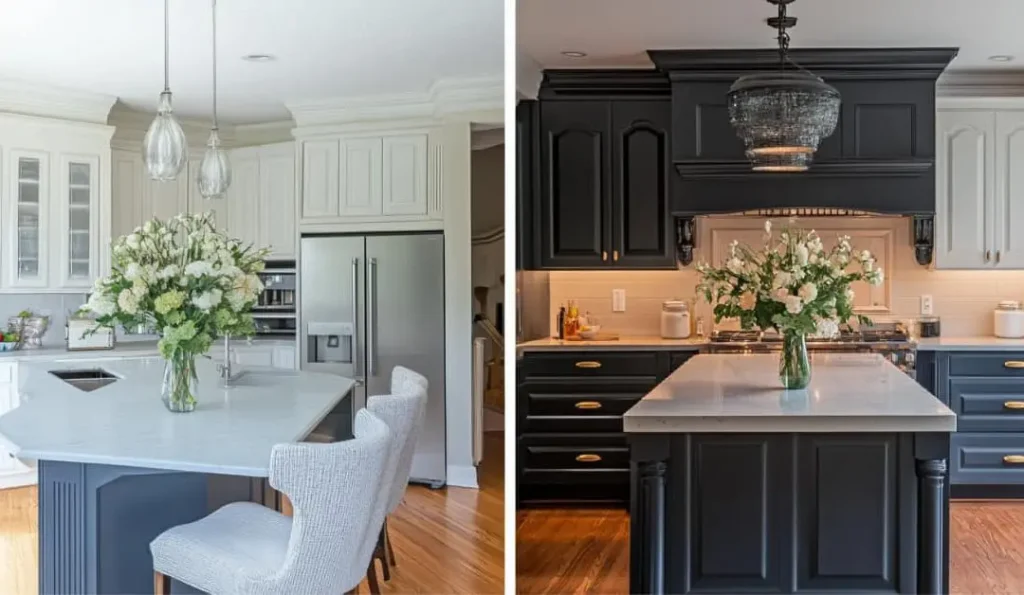
Painting your kitchen cabinets is one of the smartest upgrades you can make. It costs a fraction of a full remodel and can completely transform how your kitchen looks and feels. But the paint you choose makes or breaks the whole project.
So, what is the best paint for kitchen cabinets? Short answer: a water-based urethane or alkyd enamel. It dries hard, cleans up easily, and holds up against grease, moisture, and daily use. This guide covers everything you need to pick the right one.
Why Choosing the Right Paint for Kitchen Cabinets Matters
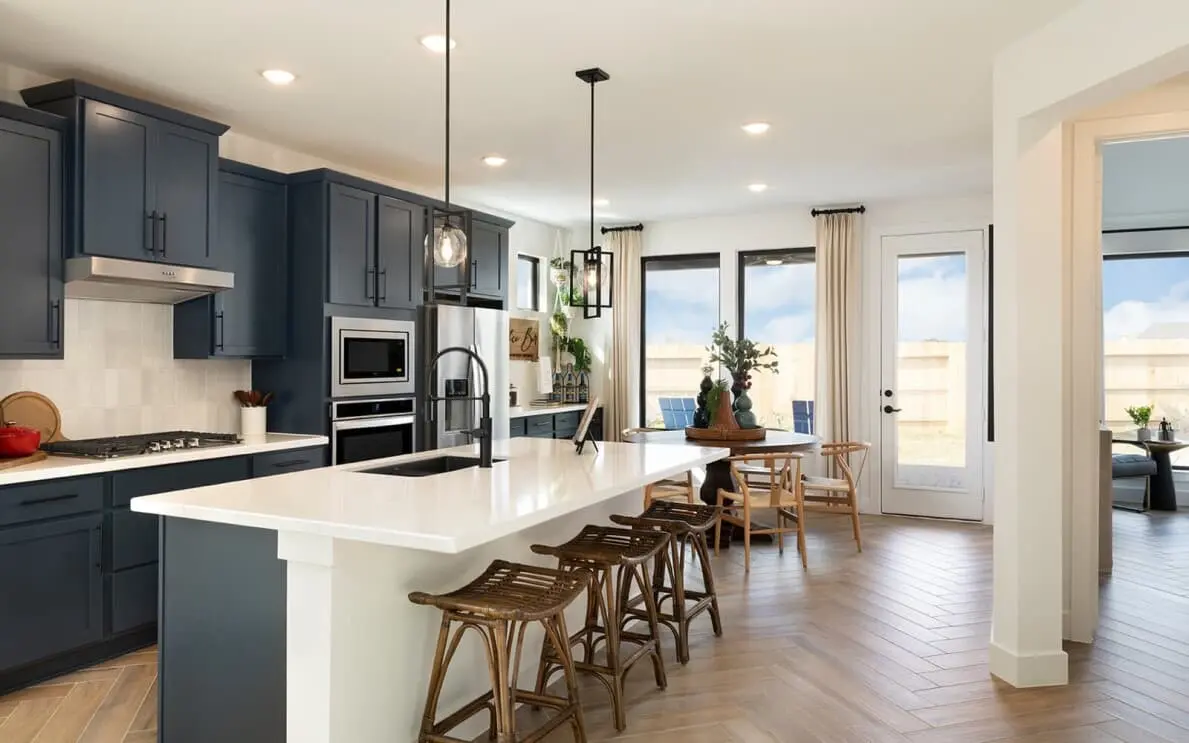
Kitchen cabinets take a beating every single day. Heat from the stove, steam from boiling water, grease splatter, and hands opening and closing doors hundreds of times a week all of this wears down a weak finish fast.
Regular wall paint was not made for this. It stays soft, absorbs grease, and starts peeling near hinges within months. The right cabinet paint bonds hard to the surface, resists moisture, and wipes clean without breaking down.
Choosing wrong means repainting in a year. Choosing right means a finish that looks good for five to ten years with basic care.
What Is the Best Paint for Kitchen Cabinets?
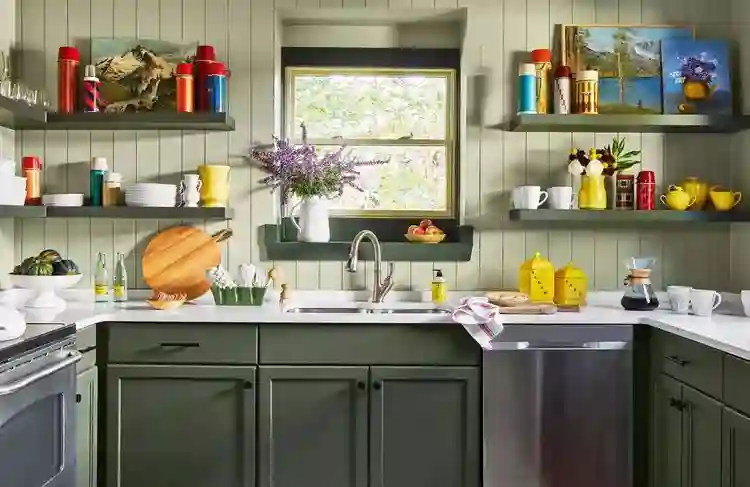
The best kitchen cabinet paint is a urethane trim enamel or water-based alkyd enamel. These are made for hard surfaces like cabinets, doors, and trim. They cure into a tough shell that regular latex paint simply cannot match.
Here is what makes them stand out:
- They self-level, meaning brush marks and roller texture flatten out as the paint dries
- They cure hard, resisting scratches, dents, and scuffs
- They clean up with soap and water
- They resist yellowing, especially in white and light colors
The two most trusted options among professional painters are Sherwin-Williams Emerald Urethane Trim Enamel and Benjamin Moore Advance. Both deliver a factory-smooth finish when applied correctly.
For most homeowners, Sherwin-Williams Emerald Urethane Trim Enamel is the top pick. It performs like an oil paint but cleans up with water. It is what many pros reach for on high-end cabinet jobs and it is the paint we recommend most at Prestigious Custom Cabinets.
You can read about: How Much Does It Cost to Paint Kitchen Cabinets
Oil vs Water-Based Paint: Which Is Better for Cabinets?
This is one of the most common questions we get. Here is a clear breakdown:
| Feature | Oil-Based Paint | Water-Based Enamel |
| Dry time | 24+ hours between coats | 4 hours between coats |
| Yellowing | Yes, over time | No (urethane formula) |
| Cleanup | Mineral spirits needed | Soap and water |
| VOCs | High | Low |
| Finish hardness | Very hard | Nearly identical |
| Best for | Old cabinets with existing oil paint | Most modern kitchens |
Oil-based paint was the standard for decades. It levels beautifully and dries extremely hard. The problem is the long dry time, strong fumes, and the fact that it yellows especially in low-light kitchens.
Water-based urethane and alkyd enamels have closed the gap almost completely. Modern formulas are just as hard, just as durable, and they do not yellow. They are also far easier to work with indoors.
The one case where oil still makes sense: if your cabinets already have existing oil-based paint on them, stick with oil or use an oil-compatible bonding primer before switching. Adhesion matters more than anything else.
How and Why to Use Sherwin-Williams Emerald Urethane Trim Enamel
Sherwin-Williams Emerald Urethane Trim Enamel is hands-down the best paint for cabinet doors and cabinet boxes in our experience. Here is why professionals and serious DIYers keep coming back to it:
It self-levels beautifully. Brush marks and roller texture flatten out on their own as it dries. You do not need a sprayer to get a smooth finish, though spraying gives the best results.
It cures rock hard. After a full 7-day cure, the surface resists scratches, scuffs, and cleaning chemicals without breaking down.
It is not yellow. In white and off-white colors, this matters a lot. Many oil paints turn yellow in cabinets near windows or in darker areas. The urethane formula prevents this.
It is water-based. Cleanup with soap and water. Dry time of around 4 hours between coats. Low odor for an indoor project.
It is available in any color. Any Sherwin-Williams color swatch can be mixed into this formula.
How to use it step by step:
- Degrease all surfaces with TSP or a dedicated degreaser
- Sand with 150-grit, then 220-grit to scuff the surface
- Wipe away all dust with a tack cloth
- Apply a bonding primer shellac-based or water-based bonding primer works well
- Sand the primer lightly with 220-grit once dry
- Apply two thin coats of Emerald Urethane, sanding lightly between coats
- Allow 7 full days before heavy use or closing cabinet doors
One tip: do not over-thin the paint. A small amount of water (no more than 10%) is fine for spraying, but over-thinning weakens the finish.
Other Popular Cabinet Paint Options to Consider
If you want to compare before deciding, here are four solid alternatives:
Benjamin Moore Advance is a waterborne alkyd paint that levels smoothly and dries hard. It is a favorite among professional painters who want an oil-like finish without the cleanup hassle. The main downside is the dry time 16 hours between coats versus 4 hours for Sherwin-Williams.
Dutch Boy Cabinet, Door and Trim Alkyd Enamel is the best budget paint for kitchen cabinets. At roughly half the price of Sherwin-Williams, it still performs surprisingly well. Brushes nicely, levels well, and dries to a scratch-resistant finish. If you are working with a tight budget, this is the one to try.
Insl-X Cabinet Coat Urethane Acrylic is another strong performer for brushing and rolling. It is harder to spray than Sherwin-Williams but gives excellent durability when rolled on with a high-density foam roller.
General Finishes Milk Paint works well for a matte, furniture-style look. It does not require primer in most cases, which saves time. For kitchen use, we always recommend adding a clear water-based topcoat for extra protection.
What Sheen Is Best for Kitchen Cabinets?
Sheen affects how the cabinets look and how easy they are to keep clean. Here is what each level means in a kitchen setting:
Matte vs Satin vs Semi-Gloss vs High-Gloss: What to Choose
Matte: Looks soft and modern. The problem is it absorbs grease and fingerprints. Very hard to wipe clean without leaving marks. Not recommended for lower cabinets or any cabinet near the stove or sink.
Satin: The most popular choice for a reason. Gentle low-shine finish, easy to wipe down, and it hides minor surface imperfections better than any gloss option. Great all-around choice for most kitchens.
Semi-Gloss: The go-to for high-traffic kitchens. More reflective than satin, very easy to clean, and highly durable. Shows surface imperfections more, so prep work matters. This is what we most often use on cabinet doors at Prestigious Custom Cabinets.
High-Gloss: Maximum sheen and maximum durability. Looks modern and sleek, especially on flat-panel European-style doors. The catch is that every brush mark, roller line, and surface flaw will show clearly. Best results require spray application only.
Our recommendation: Satin or semi-gloss for most kitchens. Semi-gloss if you want extra cleanability. High-gloss only if you are using an HVLP sprayer and your surface prep is flawless.
How to Paint Kitchen Cabinets for a Professional Finish
Getting a professional result is less about the paint brand and more about the prep and process. Here is the full process we follow:
Step 1: Remove everything. Take cabinet doors off. Remove all hinges, knobs, and pulls. Label each door so reassembly is easy.
Step 2: Degrease. Use TSP (trisodium phosphate) or a good kitchen degreaser. Grease is the number one cause of paint failure on cabinets. Do not skip this.
Step 3: Sand. Sand all surfaces with 150-grit, then follow with 220-grit. You are scuffing the surface so primer bonds properly. Wipe all dust away with a tack cloth.
Step 4: Prime. Apply a bonding primer. This step is non-negotiable. Shellac-based primer like Zinsser BIN is our top pick. It blocks stains, seals wood tannins, and gives paint something solid to grip.
Step 5: Sand the primer. Once dry, lightly sand with 220-grit for a smooth base coat.
Step 6: Paint. Apply two thin coats of cabinet enamel. Thin coats always outperform one thick coat. Sand between coats with 220-grit.
Step 7: Cure. Allow at least 7 days before heavy use. Rehang doors after 24 to 48 hours but keep them open for another week while the paint finishes curing.
If this process feels like a lot to manage on your own, our team at Prestigious Custom Cabinets handles every step from degreasing and priming to a spray-applied factory finish. Learn more about our Kitchen Cabinet Painting Services in Long Island and see what a professional result looks like.

How to Get a Factory Smooth Paint Finish
The secret to a smooth finish comes down to two things: thin coats and the right application tool.
Brush and roller: Use a high-density foam roller for flat panels. Use an angled brush for edges and recessed areas. This combination gives a smooth finish without needing a sprayer. After rolling, lightly tip off the wet paint with a dry brush to reduce roller texture.
HVLP sprayer: This is how pros get that glassy, spray-lacquer look. A high-volume low-pressure sprayer atomizes paint into a fine mist with minimal overspray. It takes practice, but the result is difficult to match with a brush.
Tips that make a real difference:
- Strain your paint before loading the sprayer
- Always paint in a dust-free area a single dust particle can ruin a wet panel
- Keep coats thin and even; two thin coats beat one thick coat every time
- Sand between each coat with 220-grit before applying the next
What Paint Did We Use? (Real Experience Section)
We have used several cabinet paints across dozens of kitchen jobs. The clear winner in our hands-on experience is Sherwin-Williams Emerald Urethane Trim Enamel in Satin.
We have sprayed it on MDF doors, solid wood frames, and plywood boxes. In every case, it leveled beautifully and cured into a finish that feels close to factory-sprayed lacquer. Three years in on some of those kitchens, the finish still looks clean and holds up to daily use.
Our second choice for clients who want to DIY is Benjamin Moore Advance. It brushes out a little more forgivingly than Sherwin-Williams and still gives a tough, professional finish. The longer dry time is the trade-off.
For budget-conscious projects, Dutch Boy Cabinet, Door and Trim performs better than you would expect at its price point. It is not quite Sherwin-Williams level, but it is far better than any basic latex paint.
Things to Consider Before Choosing Cabinet Paint
Before you buy anything, think through these:
What are your cabinets made of? MDF, plywood, and solid wood all absorb paint differently. Bare MDF needs a shellac primer first or the edges will raise and bubble.
What finish is already on them? If your cabinets have existing oil-based paint, use an oil-compatible primer before switching to water-based enamel. Skipping this step causes adhesion failure.
What application method will you use? Urethane enamels work well with a brush, roller, or sprayer. But spraying gives a far smoother finish. If you do not own a sprayer, consider renting one or hiring a professional.
What color are you painting? Light colors, especially bright white show every surface flaw and may need three coats for full, even coverage. Prep work is even more critical with lighter shades.
What is your budget? Premium cabinet enamel runs $60 to $110 per gallon depending on brand. For a full kitchen, budget for 2 to 3 gallons of paint plus a gallon of primer. Spending on quality paint upfront saves you from repainting in a year.
Conclusion
What is the best paint for kitchen cabinets? A urethane or alkyd enamel made specifically for hard surfaces. Products like Sherwin-Williams Emerald Urethane Trim Enamel and Benjamin Moore Advance top the list because they are hard, smooth, and built to last in a high-use kitchen environment.
The prep work matters just as much as the paint. Degrease, sand, prime, and apply thin coats. If you want results that look like a factory finish without doing it yourself, the team at Prestigious Custom Cabinets is here to help.
FAQs
Can I use regular wall paint on kitchen cabinets?
No. Wall paint is too soft and chips quickly on cabinet surfaces. Always use a cabinet enamel or trim enamel built for hard surfaces.
What kind of paint do you use on kitchen cabinets professionally?
Most professional painters use water-based urethane or alkyd enamel. Sherwin-Williams Emerald Urethane Trim Enamel and Benjamin Moore Advance are the two most common choices.
What kind of paint to use for cabinets if I’m on a budget?
Dutch Boy Cabinet, Door and Trim Alkyd Enamel is the best budget option. It performs well and costs roughly half the price of premium brands.
What is the best paint finish for cabinets?
Satin or semi-gloss. Satin hides surface imperfections and is easy to clean. Semi-gloss is slightly more durable and easier to wipe down. High-gloss works well but requires spray application for best results.
How many coats of paint do cabinets need?
Two coats of enamel over one coat of primer is the standard. Light colors may need a third coat for full coverage.