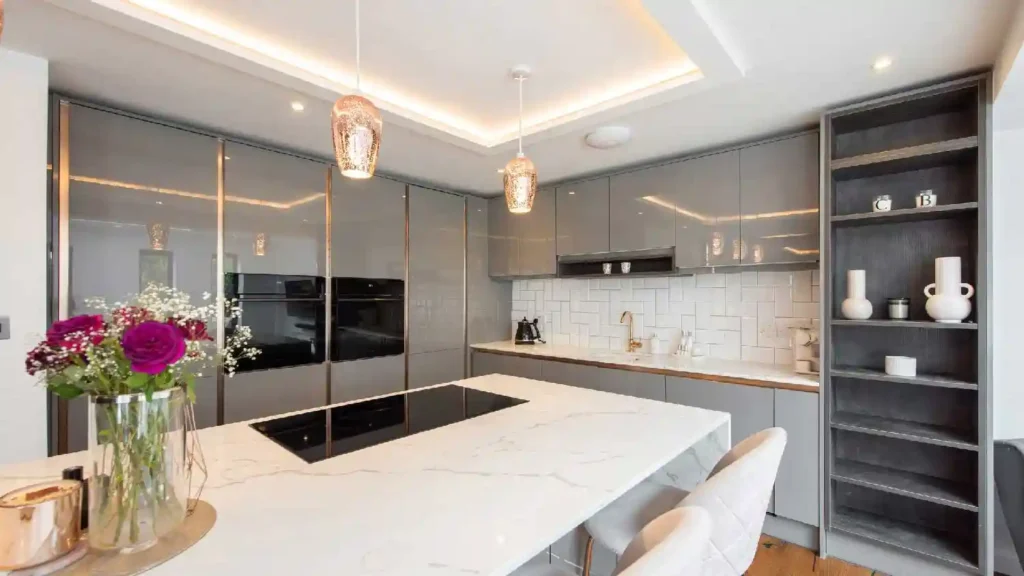
Kitchens have changed a lot. Clean lines, bold materials, and smart design are what homeowners want now. One feature that keeps showing up in modern homes is the waterfall countertop. It looks sharp, feels expensive, and adds real visual weight to any kitchen.
So, what is a waterfall countertop exactly? It’s a countertop where the surface material runs straight down the sides of the island or cabinet, all the way to the floor. It creates a smooth, unbroken edge like water falling down. Below, you’ll learn everything about this design choice before you commit to it.
What Is a Waterfall Countertop?
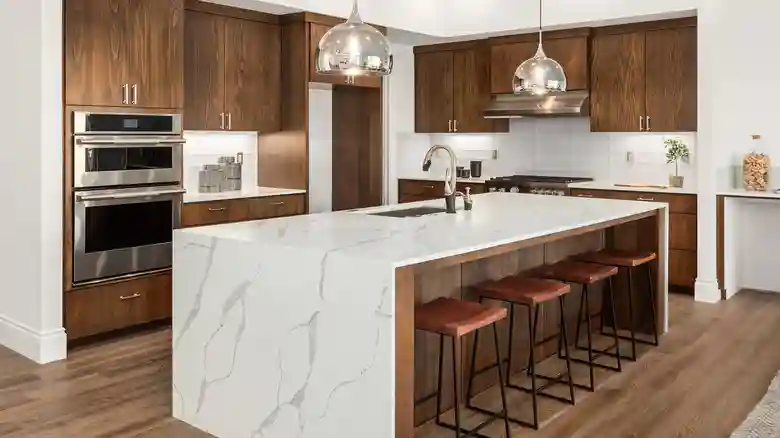
A waterfall countertop is a style where the countertop material extends vertically down one or both sides of an island or cabinet base. Instead of stopping at the edge, the slab keeps going floor to top in one continuous piece.
The term “waterfall” comes from how it looks. The material seems to flow downward, like a sheet of water falling over a ledge.
This style is popular in modern and contemporary kitchens. But it also works in transitional spaces where clean design meets warmth.
How It Differs from a Standard Countertop
A regular countertop sits flat on top of cabinets. The sides are either exposed raw wood or covered with a simple panel in a different material. A waterfall counter wraps around the side, using the same material top-to-bottom.
That matching edge is the whole point. It creates visual unity. Everything looks like it was carved from one piece.
A Quick History
The waterfall edge became popular in the early 2010s as open-plan kitchens took over. Homeowners wanted islands that looked like furniture sculptural, clean, and intentional. High-end designers started using it with marble and quartz. By the mid-2020s, it became a mainstream request in kitchen remodels across the country.
Design Advantages of Waterfall Countertops with Design Surfaces
There are real reasons designers love this look. Here’s what waterfall countertops bring to the table literally.
1. Strong Visual Impact
A waterfall counter commands attention. When you walk into a kitchen, the island becomes a focal point. The vertical slab adds height and depth to what would otherwise be a flat, horizontal surface.
If your material has bold veining like marble or certain quartzite the pattern flows from top to side. That continuity is stunning. Interior designers call it “book matching,” where two slabs are mirrored to create a symmetrical pattern across the seam.
2. Protects Cabinet Sides
The vertical panel isn’t just pretty. It covers and protects the cabinet sides from bumps, scuffs, and moisture. This matters on kitchen islands that take daily wear backpacks dropped against them, chairs scraping, cleaning products splashing.
A stone or quartz panel is far more durable than painted wood.
3. Hides Cabinet Construction
Not every cabinet build is perfect. A waterfall countertop hides the end panel of your cabinets completely. If you’ve got a seam, a small gap, or a less-than-perfect finish on the cabinet side, the slab covers it cleanly.
4. Works with Many Layouts
Waterfall countertops work on:
- Kitchen islands (most common)
- Peninsulas
- Breakfast bars
- Bar counters in dining rooms
- Bathroom vanities
You’re not locked into one room or one use case.
5. Adds Resale Value
Buyers notice quality finishes. A well-done waterfall counter signals a thoughtful kitchen renovation. Real estate agents in major markets consistently list it as a kitchen feature that attracts buyers and supports higher asking prices.
You can read about: How Much Does It Cost to Install Countertops
Potential Drawbacks and Practical Considerations
No design choice is perfect. Before you commit to waterfall countertops, know what you’re getting into.
1. Higher Material Cost
You need more material. A standard countertop covers only the top surface. A waterfall counter needs extra slab for the vertical panel. Depending on your material, that can add significant cost.
With natural stone like marble, you also want the veining to match. That means choosing your slabs carefully at the yard and sometimes paying more to get two pieces from the same block.
2. More Complex Installation
Installing a waterfall counter isn’t a basic job. The mitered corner where the top meets the side panel needs precision cutting. A bad cut shows a gap or an off-angle seam. You need an experienced fabricator who has done this before.
At Prestigious Custom Cabinets, we work with skilled fabricators who handle these cuts with care. The seam should be nearly invisible when done right.
3. Seating Challenges
If you want bar stools at your island, a waterfall end can get in the way. The vertical slab blocks the corner seat. You either lose that corner position or you need to plan your layout around it from the start.
This is a common issue homeowners don’t think about until the cabinets are already set. Plan your seating layout before you finalize the waterfall design.
4. Not Every Style Fits
Waterfall countertops look best in modern, contemporary, or transitional kitchens. If your home has a farmhouse, cottage, or traditional style, the look can feel out of place. It’s a bold design statement to make sure your overall aesthetic supports it.
5. Cleaning Around the Base
The bottom edge of the vertical panel sits right at the floor. Mopping around it and keeping the base clean takes a little more attention. You’ll want a tight seal between the stone and the floor to prevent moisture from getting underneath.
Choosing Materials and Finishes for Your Waterfall Kitchen Island
The material you pick shapes everything: the look, the durability, and the price. Here are the most common options for what waterfall countertops are made of.
Quartz
Quartz is the most popular choice for waterfall countertops right now. It’s engineered, so it’s consistent in color and pattern. It doesn’t need sealing. It handles heat and scratches reasonably well.
For a waterfall edge, quartz is forgiving because the pattern is uniform. Matching the top and the side panel is easy, no dramatic veining to align.
Best for: Busy kitchens, families, people who want low maintenance.
Marble
Marble is timeless. The natural veining gives a waterfall counter its most dramatic look. When the veins flow from the top down the side, it’s genuinely beautiful.
The catch: marble is porous. It stains. It etches from acidic foods and drinks. You need to seal it and treat it with care.
Best for: Design-forward kitchens where looks matter more than durability.
Quartzite
Quartzite is a natural stone that looks similar to marble but is much harder. It’s heat resistant, scratch resistant, and durable. The veining is natural and can be stunning on a waterfall edge.
It costs more than quartz but less than high-end marble. And it holds up better over time.
Best for: Homeowners who want a natural stone look without marble’s maintenance.
Porcelain Slabs
Large-format porcelain slabs have become a strong option for waterfall counters. They’re thin, light, and come in a huge range of finishes including ones that look exactly like marble or concrete.
Porcelain is scratch resistant, heat resistant, and virtually non-porous. It’s a smart choice if you want the look of natural stone without the upkeep.
Best for: Modern kitchens, homeowners who want bold patterns without natural stone costs.
Granite
Granite is durable and has been a kitchen staple for decades. For waterfall counters, it works well but matching the pattern across the seam can be tricky because granite’s patterns are random.
Best for: Traditional or transitional kitchens where you want a natural stone feel at a moderate price.
Wood and Butcher Block
Waterfall counters in wood are less common but striking. The grain flows from the top down the side, creating a warm, organic look. This works especially well in Scandinavian-style or warm modern kitchens.
Wood requires more maintenance, regular oiling, careful drying, and protection from standing water.
Best for: Kitchens where warmth and texture matter more than sleek precision.
What Does a Waterfall Countertop Cost?
Cost depends on material, size, and fabrication complexity. Here’s a general breakdown:
| Material | Approximate Cost (per linear foot, installed) |
| Quartz | $100–$200 |
| Marble | $150–$350+ |
| Quartzite | $130–$300 |
| Porcelain Slab | $100–$250 |
| Granite | $80–$180 |
| Wood/Butcher Block | $60–$150 |
These are estimates. Prices vary by region, slab thickness, and the complexity of your waterfall design. Always get a detailed quote from your fabricator before committing.
How to Plan Your Waterfall Countertop Installation
Getting the installation right starts before the material is ever cut. Here’s what to think through.
Step 1: Decide on one side or both. A waterfall on one end is more common and less expensive. Two sides creates a more enclosed, structured look.
Step 2: Plan your seating. If you want corner stools, the waterfall end can limit seating. Work this out with your designer early.
Step 3: Choose your material and slab. For natural stone, go to the yard and pick your actual slabs. See how the veining looks and whether the top and side will match well.
Step 4: Find an experienced fabricator. The mitered corner needs precision. Ask to see past waterfall countertop work before hiring anyone.
Step 5: Confirm floor clearance. The bottom of the vertical panel needs to sit cleanly against your floor. If you’re replacing flooring at the same time, coordinate the sequencing carefully.
Is a Waterfall Countertop Right for Your Cleveland Kitchen?
If you have an open kitchen with an island, you’re already a good candidate. Waterfall countertops shine in spaces where the island is visible from multiple angles a living room, dining area, or entryway.
They work best when:
- Your kitchen style is modern, contemporary, or transitional
- You have an island or peninsula with visible side panels
- You want a statement material with visual drama
- You’re willing to invest in quality fabrication
They may not be the right fit if:
- Your kitchen is small and the island is cramped
- Your design style is traditional or farmhouse
- You need corner seating at every available spot
- Your budget is tight and material costs are a concern
The honest answer is it depends on your space, your style, and your budget. That’s why talking to someone who builds and installs these every day matters.
Conclusion
A waterfall countertop is one of the most striking upgrades you can make to a kitchen. The idea is simple: the countertop material flows straight down the side of your island to the floor. The result is bold, clean, and unmistakably modern.
It costs more than a standard countertop edge. It takes more skill to install. But when it’s done right, it turns an ordinary island into the centerpiece of your kitchen.
If you’re thinking about this for your home, start with the right team. Prestigious Custom Cabinets specializes in full kitchen builds cabinets, countertops, and everything in between. Our team handles Countertops Installation in North Lindenhurst with precision and care, so your waterfall edge looks exactly the way you imagined it.
Ready to talk through your kitchen? Contact us to Prestigious Custom Cabinets today and let’s plan something worth showing off.
Frequently Asked Questions
What is a waterfall countertop?
It’s a countertop where the surface material extends vertically down the side of an island or cabinet, going all the way to the floor. It creates a continuous, unbroken edge on the side panel.
What are waterfall countertops made of?
The most common materials are quartz, marble, quartzite, granite, porcelain slab, and wood. Each has different looks, price points, and maintenance needs.
Are waterfall countertops expensive?
They cost more than standard countertops because they use more material and require more precise fabrication. Quartz options are on the lower end; marble and quartzite cost more.
Can you add seating to a waterfall island?
Yes, but the waterfall end limits corner seating. Plan your seating layout before finalizing the design so you don’t lose usable spots.
How long does it take to install a waterfall countertop?
Fabrication typically takes one to two weeks after the material is chosen and templated. Installation itself is usually a one-day job.